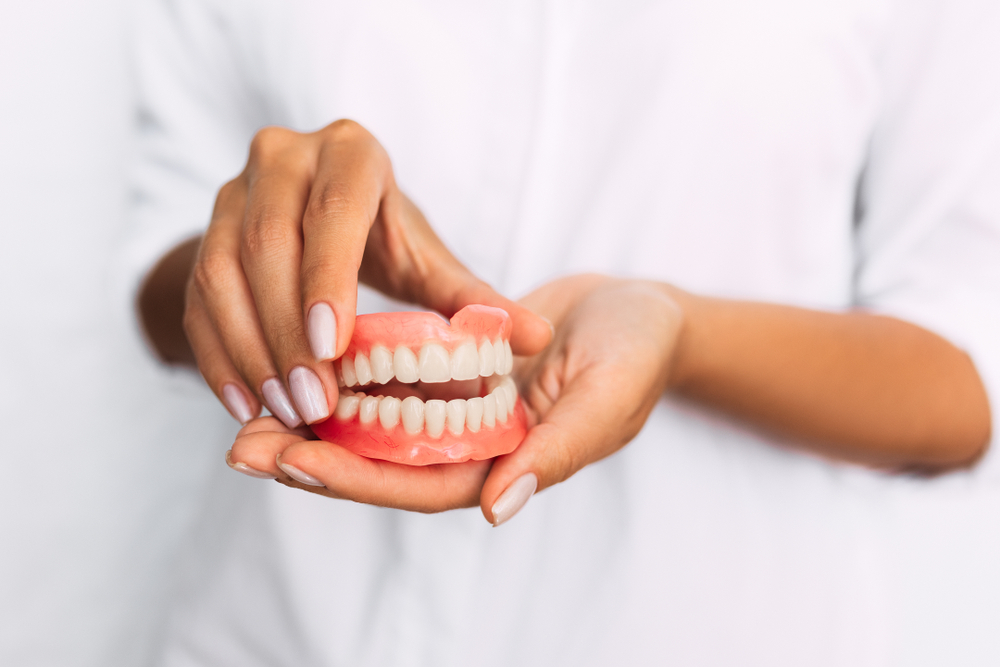
What Are the Benefits of Dentures?
Replacing missing teeth can improve more than the appearance of your smile. Teeth play an important role in everyday functions such as chewing and speaking.
Dentures can help:
- Replace several or all missing teeth
- Improve your ability to chew a wider variety of foods
- Support clearer speech
- Restore the appearance of your smile
- Provide support for the lips and cheeks
- Improve your bite when teeth are missing
The amount of function a denture restores varies from person to person. Proper fit, regular dental care, and time spent adapting to your dentures all play a role.
What Is the Denture Process?
Getting dentures typically involves several appointments. Your dentist first examines your mouth and discusses your needs, concerns, and treatment options.
Measurements, impressions, or digital scans may then be taken to help create a denture that fits your mouth. Your bite, tooth shape, tooth size, and appearance may also be considered during the design process.
Once your denture is ready, your dentist will check its fit and bite. Adjustments are common, particularly with a new denture, and help address areas that feel uncomfortable as you begin wearing it.
The process can differ if teeth need to be extracted first or if dental implants are being used to support the denture.
Getting Used to New Dentures
New dentures can take some time to get used to. They may initially feel unfamiliar or bulky, and eating and speaking can require practice while your mouth adjusts.
Starting with softer foods and taking smaller bites can make eating easier during the adjustment period. Reading aloud or practicing difficult words can also help you become more comfortable speaking with your dentures.
Some initial tenderness can occur, but persistent pain or significant irritation should be evaluated by your dentist. A small adjustment may be all that is needed to improve the fit.
How Do You Care for Dentures?
Daily care helps keep your dentures clean and protects the health of your gums and remaining teeth.
Remove and clean your dentures as directed by your dental team. Dentures should generally be cleaned using products and techniques appropriate for denture materials, since regular toothpaste can be too abrasive for some appliances.
Your gums, tongue, and any remaining natural teeth also require daily cleaning. Even if you no longer have natural teeth, regular dental visits remain important so your dentist can examine your gums, oral tissues, bite, and the fit of your dentures.
How Long Do Dentures Last?
Dentures do not last forever. Normal wear can gradually affect the teeth and materials, while natural changes to your gums and jawbone can alter how your dentures fit.
A denture that once fit comfortably may eventually begin to feel loose or unstable. Depending on its condition, your dentist may recommend an adjustment, reline, repair, or replacement.
Regular dental examinations make it easier to identify changes in fit before they begin causing significant discomfort or difficulty eating.
Are Dentures Right for You?
Dentures may be an option if you have lost several teeth or an entire arch of teeth. However, they are only one approach to replacing missing teeth.
Depending on your oral health and goals, alternatives may include dental bridges, dental implants, or implant-supported restorations. Each option has different considerations related to stability, maintenance, treatment time, and your remaining teeth and bone.
A dental examination is the best way to understand your options. Your dentist can evaluate your mouth and explain which approach fits your needs.