Sealants

Dental sealants are thin protective coatings applied to the chewing surfaces of teeth to help prevent cavities. They are most commonly used on back teeth, where deep grooves can trap food and plaque and be difficult to clean thoroughly with a toothbrush.

What Are Dental Sealants?

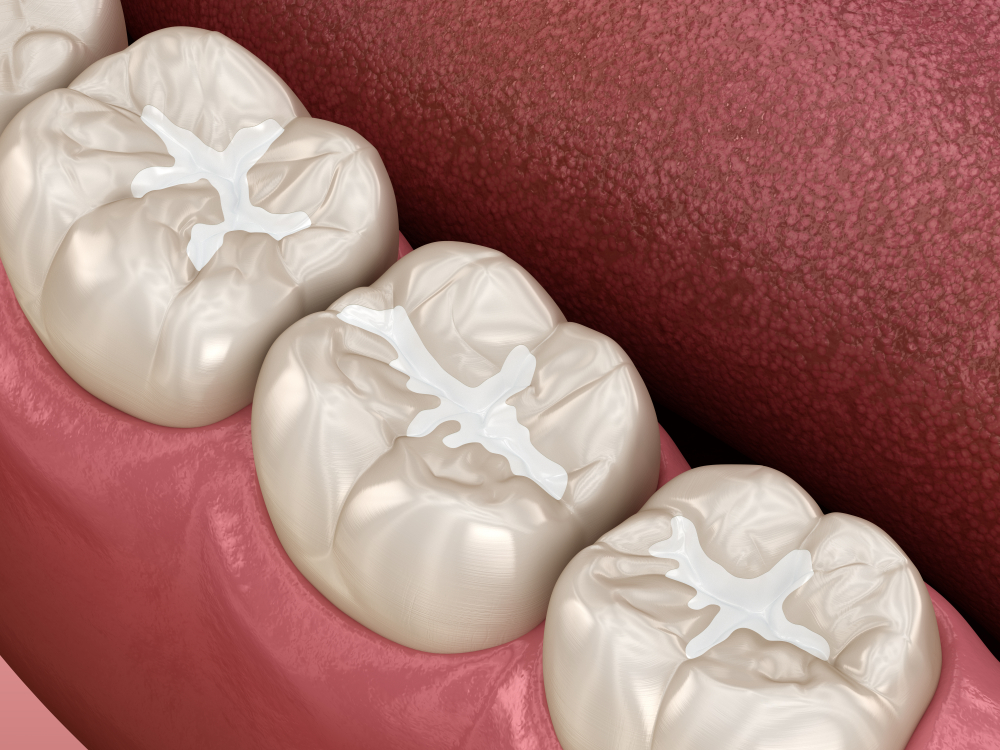
sealants 3d example

The chewing surfaces of molars and premolars naturally contain pits and grooves. In some teeth, these grooves are narrow or deep enough that toothbrush bristles cannot easily reach every area.

Dental sealants create a protective layer over these vulnerable surfaces. By covering the grooves, the sealant makes it more difficult for food particles and cavity-causing bacteria to collect directly against the tooth.

Sealants are a preventive treatment. They do not replace brushing, flossing, regular dental examinations, or other forms of preventive dental care.

How Do Dental Sealants Help Prevent Cavities?

Tooth decay develops when acids produced by bacteria in dental plaque begin breaking down the tooth’s surface.

The grooves of back teeth can be particularly susceptible because plaque and food can become trapped in areas that are difficult to clean.

A sealant forms a barrier over these grooves, reducing the opportunity for bacteria and food debris to collect there.

The smooth sealed surface can also make the chewing surface of the tooth easier to keep clean.

Who Can Benefit From Dental Sealants?

Sealants are frequently recommended for children and teenagers as their permanent back teeth come in.

Protecting these teeth early can help reduce their exposure to decay during years when oral hygiene habits and diet may still be developing.

Adults can also benefit from sealants in certain situations, particularly when they have deep grooves in back teeth that are considered at increased risk for decay.

Not every tooth needs a sealant. Your dentist can examine the tooth’s anatomy, existing restorations, cavity history, and other risk factors before recommending treatment.

How Are Dental Sealants Applied?

Applying a dental sealant is generally a straightforward procedure and does not usually require removing healthy tooth structure.

The tooth is first cleaned and prepared so the sealant material can bond properly. It is then kept dry while the liquid sealant is placed into the grooves of the chewing surface.

The material is hardened, typically using a curing light, creating a protective coating over the tooth.

Your dentist will check the sealant and your bite after it has been placed.
Do Dental Sealants Hurt?

Sealant application does not normally require drilling into the tooth, and local anesthetic is generally unnecessary when a sealant is being placed on an otherwise healthy tooth.

You may notice the material being applied or feel that the tooth is slightly different immediately afterward. Your bite is checked after placement, and adjustments can be made if necessary.

How Long Do Dental Sealants Last?

Dental sealants can remain effective for years, but they are exposed to the same everyday chewing forces as the rest of your teeth.

Over time, a sealant may wear down, chip, or come away from part of the tooth.

Your dentist can check existing sealants during routine dental examinations. If a sealant has become worn or damaged, it may be repaired or replaced when appropriate.

Can You Still Get a Cavity With Dental Sealants?

Yes. Sealants help protect the surfaces they cover, but they do not make a tooth immune to decay.

Cavities can still develop between teeth, along the gumline, or in areas that are not covered by the sealant. Decay may also develop if a sealant becomes damaged and the tooth underneath is no longer adequately protected.

Brushing with fluoride toothpaste, cleaning between your teeth, maintaining a balanced diet, and attending regular dental examinations remain important even when sealants are present.

Add an Extra Layer of Protection Against Cavities

Some teeth are naturally more difficult to keep clean because of deep pits and grooves in their chewing surfaces. Dental sealants can provide additional protection in these cavity-prone areas.

Contact our dental team to find out whether sealants may be appropriate for you or your child.

FAQs About Sealants

No. Sealants are commonly recommended for children and teenagers, but adults with cavity-prone grooves in their back teeth may also benefit. Your dentist can determine whether a particular tooth is a good candidate for a sealant.

Sealants placed on healthy teeth generally do not require drilling away tooth structure. The tooth surface is cleaned and prepared before the sealant material is applied and hardened.

Yes. Teeth with sealants should continue to be brushed and cleaned normally. Sealants protect specific areas of the chewing surface but do not replace regular oral hygiene.

Not on a fixed schedule. Your dentist can check sealants during routine examinations and determine whether they remain intact. A worn, chipped, or missing sealant may be repaired or replaced if continued protection is appropriate.

We strive to...

Create a welcoming environment where you feel heard, respected, and at ease throughout your visit.

Help you understand your oral health and treatment options so you can make informed decisions about your care.

Take the time to understand your concerns, priorities, and goals before recommending treatment.

Earn your trust through consistent care, open communication, and a patient-first approach.

Insurance & Billing

Our friendly team will help you complete insurance paperwork in advance for a better, faster, experience. We make it easy.

Why Choose Our Practice

Patient First Approach

"Lorem ipsum dolor sit amet, consectetur adipiscing elit, sed do eiusmod tempor incididunt ut labore et dolore magna aliqua. Ut enim ad minim veniam, quis nostrud exercitation ullamco laboris nisi ut aliquip ex ea commodo consequat.

Welcoming Team

"Lorem ipsum dolor sit amet, consectetur adipiscing elit, sed do eiusmod tempor incididunt ut labore et dolore magna aliqua. Ut enim ad minim veniam, quis nostrud exercitation ullamco laboris nisi ut aliquip ex ea commodo consequat.

Payment Options

"Lorem ipsum dolor sit amet, consectetur adipiscing elit, sed do eiusmod tempor incididunt ut labore et dolore magna aliqua. Ut enim ad minim veniam, quis nostrud exercitation ullamco laboris nisi ut aliquip ex ea commodo consequat.

Our Satisfied Patients

We love hearing from our patients! Thank you to everyone who has taken the time to provide us with feedback. It means the world to us!