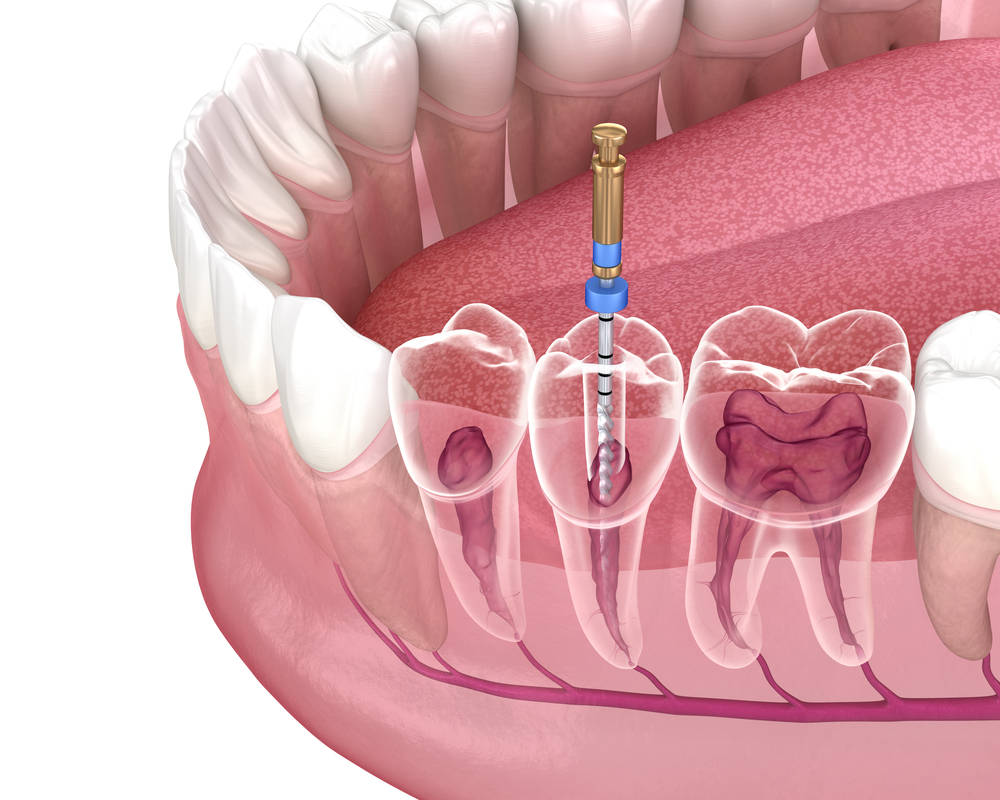
Do You Need a Crown After a Root Canal?
A tooth that has received root canal treatment often requires a final restoration to protect it and restore normal function.
Back teeth such as molars and premolars frequently receive dental crowns because they experience significant biting forces. A crown can help protect the remaining tooth structure from fracture.
However, not every root canal-treated tooth requires the same type of restoration. The appropriate choice depends on the tooth’s location, how much healthy structure remains, and the forces placed on it.
Your dentist will explain how the tooth should be restored after root canal treatment.
Does a Root Canal Hurt?
Root canal treatment is performed to address a tooth that may already be causing significant discomfort.
Local anesthetic is used to numb the treatment area, with the goal of keeping you comfortable during the procedure. You may notice pressure or movement while the tooth is being treated.
Some tenderness or sensitivity around the tooth can occur afterward and typically improves as the area heals.
If pain or swelling becomes severe, persists, or worsens after treatment, contact your dental office.
What Happens if an Infected Tooth Is Not Treated?
An infection inside a tooth does not normally resolve simply because the pain decreases.
Without appropriate treatment, bacteria can spread beyond the tooth into the surrounding tissues and bone. This can lead to an abscess, swelling, additional bone loss, or other complications.
In some cases, a severely damaged or infected tooth cannot be predictably saved and may need to be extracted.
Evaluating the tooth earlier can provide a better understanding of whether root canal treatment can preserve it.
How Long Does a Root Canal-Treated Tooth Last?
Root canal treatment is intended to allow a natural tooth to remain functional for the long term, but no dental treatment has a guaranteed lifespan.
The outcome depends on factors such as the original condition of the tooth, the amount of remaining tooth structure, the quality of the final restoration, oral hygiene, and the forces placed on the tooth.
A root canal-treated tooth can still develop decay, gum disease, fractures, or other problems because the natural tooth structure remains.
Regular dental examinations and good daily oral hygiene continue to be important after treatment.
Save Your Natural Tooth When Possible
A painful or infected tooth does not automatically need to be removed. When enough healthy tooth structure remains, root canal treatment may provide a way to address the problem while preserving your natural tooth.
Contact our dental team if you are experiencing persistent tooth pain, sensitivity, swelling, or other symptoms that could indicate a problem inside a tooth.