Pediatric Dentistry

Dental care during childhood helps protect developing teeth while building habits that can support oral health into adulthood. Children’s dental visits focus on prevention, early identification of problems, monitoring growth and development, and helping young patients become more comfortable with dental care.

What Is Pediatric Dental Care?

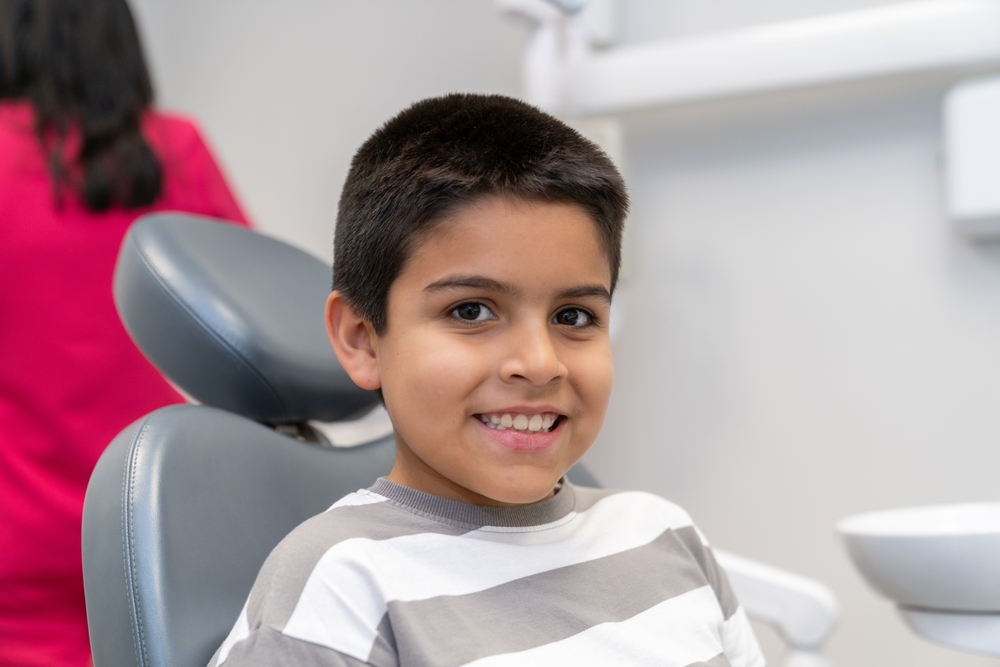
kid smiling at dentist

Pediatric dental care focuses on the oral health needs of infants, children, and teenagers as their teeth and jaws develop.

Children’s dental needs change considerably as they grow. Early visits may focus on newly erupted baby teeth and helping parents establish healthy routines. Later appointments can include monitoring permanent teeth, checking the bite, preventing cavities, and addressing dental concerns as they arise.

Regular visits also give children an opportunity to become familiar with the dental environment and develop a positive relationship with routine dental care.

When Should Children Start Seeing a Dentist?

Dental care can begin earlier than many parents expect.

Professional dental organizations generally recommend that a child’s first dental visit occur after the first tooth appears and no later than their first birthday.

Early appointments are often simple and preventive. They give the dental team an opportunity to examine developing teeth and gums while helping parents understand brushing, feeding habits, fluoride, and other factors that can influence oral health.

Starting early can also make dental visits a normal part of a child’s routine rather than something introduced only after a problem develops.

What Happens During a Child’s Dental Visit?

The exact appointment depends on the child’s age, comfort level, dental history, and individual needs.

A routine visit may include:

  • Examining the teeth and gums
  • Checking for signs of tooth decay
  • Monitoring how teeth are developing and erupting
  • Assessing oral hygiene
  • Reviewing brushing and flossing habits
  • Discussing diet and cavity risk
  • Evaluating the child’s bite and jaw development
  • Professional cleaning when appropriate
  • Fluoride treatment when recommended
  • Dental X-rays when clinically appropriate

As children grow, their dental appointments evolve with them.

Why Are Baby Teeth Important?

Baby teeth eventually fall out, but they still play an important role in a child’s development.

Primary teeth help children chew food and speak clearly. They also hold space for the permanent teeth developing underneath them.

Cavities or infections in baby teeth can cause pain and may interfere with eating, sleeping, and everyday activities. Depending on the tooth and the child’s age, losing a baby tooth earlier than expected can also affect the space available for the permanent tooth.

Keeping primary teeth healthy helps support the mouth while the adult teeth continue to develop.

Preventing Cavities in Children

Tooth decay is preventable in many cases, but children’s teeth can still be vulnerable to cavities.

Prevention begins with consistent daily habits. Children should brush using an age-appropriate amount of fluoride toothpaste and begin cleaning between teeth when the spaces between them can no longer be cleaned effectively with a toothbrush alone.

Parents often need to brush for their children or closely supervise brushing until the child has developed enough coordination to clean their teeth effectively.

Regular dental visits allow the dental team to assess cavity risk and recommend preventive care based on the child’s individual needs.

Fluoride and Children’s Teeth

Fluoride helps strengthen tooth enamel and make teeth more resistant to acid attacks that contribute to cavities.

Children can receive fluoride through sources such as fluoridated toothpaste and, in some communities, drinking water. Professional fluoride treatments may also be recommended during dental visits based on the child’s age and cavity risk.

Your dental team can provide guidance about appropriate fluoride use for your child.

Dental Sealants for Children

The chewing surfaces of back teeth often contain narrow grooves where food and plaque can collect.

Dental sealants are thin protective coatings that can be placed over these surfaces to help reduce the risk of cavities developing in the grooves.

Sealants are commonly considered when permanent molars erupt, although recommendations depend on the individual tooth and the child’s cavity risk.

Your dentist can monitor developing teeth and determine whether sealants would be beneficial.

Helping Children Feel Comfortable at the Dentist

A child’s early experiences with dental care can influence how they feel about appointments in the future.

Dental teams can adapt appointments to a child’s age and comfort level, explaining procedures in language they can understand and allowing them to become familiar with the environment.

Parents can also help by keeping conversations about dental visits calm and straightforward. Avoiding frightening descriptions or sharing negative dental experiences can help children approach the appointment without unnecessary worry.

Some children require additional time, behavioural guidance, or other accommodations to complete dental treatment comfortably. The appropriate approach depends on the individual child and the treatment required.

Monitoring Your Child’s Developing Smile

Children’s mouths change quickly.

As baby teeth fall out and permanent teeth erupt, your dentist can monitor tooth position, spacing, bite development, and jaw growth.

Not every irregularity requires treatment. Some changes are a normal part of development. When a concern is identified, monitoring it over time can help determine whether additional assessment or orthodontic treatment may eventually be appropriate.

Dental Injuries and Children’s Teeth

Falls, sports, and everyday accidents can sometimes result in dental injuries.

A child may chip, loosen, or knock out a tooth or injure the surrounding gums and lips.

Contact a dental professional if your child experiences a significant dental injury, even if the damage initially appears minor. The appropriate treatment depends on whether the injured tooth is a baby tooth or permanent tooth and the type of injury involved.

Children who participate in sports where impacts to the mouth may occur can also benefit from an appropriately fitted sports mouth guard.

Build Healthy Dental Habits Early

Regular dental care during childhood helps protect developing teeth while teaching children that looking after their smile is a normal part of staying healthy.

Contact our dental team to schedule your child’s dental visit or ask questions about their developing teeth and oral health.
FAQs About Pediatric Dentistry

The appropriate schedule depends on your child’s oral health, age, cavity risk, and individual needs. Your dentist can recommend a recall schedule that allows your child’s teeth and oral development to be monitored appropriately.

Begin brushing when the first tooth appears. Use a soft, age-appropriate toothbrush and an appropriate amount of fluoride toothpaste. Your dental team can show you how much toothpaste to use based on your child’s age.

Baby teeth may remain in the mouth for several years before they naturally fall out. Untreated decay can cause pain, infection, and damage to the tooth. Whether and how a cavity should be treated depends on the tooth, the extent of decay, and how long the tooth is expected to remain.

Many children begin losing their first baby teeth around age six, although the timing varies. The transition from primary to permanent teeth continues for several years, and your dentist can monitor this process during routine examinations.

We strive to...

Create a welcoming environment where you feel heard, respected, and at ease throughout your visit.

Help you understand your oral health and treatment options so you can make informed decisions about your care.

Take the time to understand your concerns, priorities, and goals before recommending treatment.

Earn your trust through consistent care, open communication, and a patient-first approach.

Insurance & Billing

Our friendly team will help you complete insurance paperwork in advance for a better, faster, experience. We make it easy.

Why Choose Our Practice

Patient First Approach

"Lorem ipsum dolor sit amet, consectetur adipiscing elit, sed do eiusmod tempor incididunt ut labore et dolore magna aliqua. Ut enim ad minim veniam, quis nostrud exercitation ullamco laboris nisi ut aliquip ex ea commodo consequat.

Welcoming Team

"Lorem ipsum dolor sit amet, consectetur adipiscing elit, sed do eiusmod tempor incididunt ut labore et dolore magna aliqua. Ut enim ad minim veniam, quis nostrud exercitation ullamco laboris nisi ut aliquip ex ea commodo consequat.

Payment Options

"Lorem ipsum dolor sit amet, consectetur adipiscing elit, sed do eiusmod tempor incididunt ut labore et dolore magna aliqua. Ut enim ad minim veniam, quis nostrud exercitation ullamco laboris nisi ut aliquip ex ea commodo consequat.

Our Satisfied Patients

We love hearing from our patients! Thank you to everyone who has taken the time to provide us with feedback. It means the world to us!